Caro Ryan | LotsaFreshAir
Blog home /
5 Highlights of the Walls Of Jerusalem
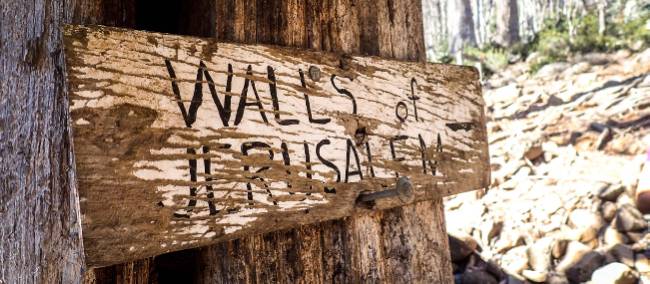
Walls of Jerusalem highlights are accessible only by foot, the is one of Tasmania’s alpine National Parks. With beautiful mountain scenery, unique flora and fauna and spectacular views across “the land of a thousand lakes”, this world-class walking opportunity has an abundance of highlights that are begging to be seen. Here are our top five Walls Of Jerusalem highlights!
1. Descending into Dixon’s Kingdom
The Walls of Jerusalem offer a unique wonderland of alpine vegetation and scenery, none more-so than on day 5 of the circuit, when trekkers descend into the awe-inspiring Dixon’s Kingdom. This ancient forest of immense pencil pines, many more than 1000 years old, provides a glimpse into Tasmania's Gondwanan heritage. Many trekkers say it's like walking through an enchanted fairy garden, both humbling and awe-inspiring, with the majestic trees towering above. We couldn't agree more!
 Credit: Mads Larsen | Dixons Kingdom hut, approaching from Wild Dog
2. Climbing King David’s peak
The Walls of Jerusalem is a playground for those seeking mountains to summit and rewarding views - and there’s no view more impressive than the one to be enjoyed from atop King David’s peak, Tasmania's 10th highest mountain. Trekkers first must climb up Solomon’s throne, traversing across the Walls of Jerusalem ridgeline and taking in the breathtaking views, before finally summiting the highest point (1499m). With panoramic 360 degree views across the entire national park and beyond, you can see as far as the Central Plateau and Cradle Mountain (weather permitting!). While the final part of King David’s peak is a challenging rock hopping scramble that’s bound to get your heart rate up, the reward is tenfold! Tackling this summit is the rare occasion where the journey is JUST as good as the destination.
 Credit: Caro Ryan LotsaFreshAir | Walls of Jerusalem
3. The chance to swim in alpine lakes and tarns
We can't think of anything better than a quick afternoon dip in an alpine lake after a day's trekking. The Walls of Jerusalem ‘pools’ will take your breath away, due to their beauty and their temperature – which can be ‘refreshingly’ cool on the warmest of days. That being said, submersing yourself in these waters is an absolutely magical experience only enhanced by the surrounding mountain views. And with a nickname of the ‘land of a thousand lakes’, there’s a chance to cool off in these lakes almost daily on the Walls of Jerusalem National Park.
 Credit Megan Pardoe | lakes and tarns
4. Achievable summits
One of our favourite things about the Walls of Jerusalem is camping each evening surrounded by incredible mountain scenery, just waiting to be explored. As the sun sets and you relax with your cup of tea at your wilderness campsite, you can take the time to admire the various peaks that you will be summiting the very next day. Thanks to being so high up in the alpine mountain area, it’s not uncommon to climb up to three peaks in a single day (weather permitting) in the Central Walls area . The accessibility of these peaks promises a spectacular and expansive view that you will remember for years to come.
 Credit Rachel Duthie | View of Solomones Throne from the pools of Bethesda
5. The geology and alpine vegetation
The dramatic scenery of the Walls of Jerusalem really has to be seen to be believed. Formed during the Jurassic period some 165 million years ago, the landscape has been carved over time by Pleistocene glaciations, which resulted in many of the tarns, lakes and moraines found in the park today. With rugged dolerite peaks that dominate the landscape, it’s easy to imagine the land before humans inhabited it; raw, unforgiving, and exceptionally beautiful. The vegetation in this sub-alpine National Park also contributes to the unique, delicate and captivating landscape that we walk through. From ancient and enchanting Pencil Pine forests, to mounds of verdant green cushion plants, this diverse landscape offers the chance to escape into a truly wild and remote area of Tasmania.
 Credit: Ingird Schnell | Alpine Vegetation
Experience it yourself!