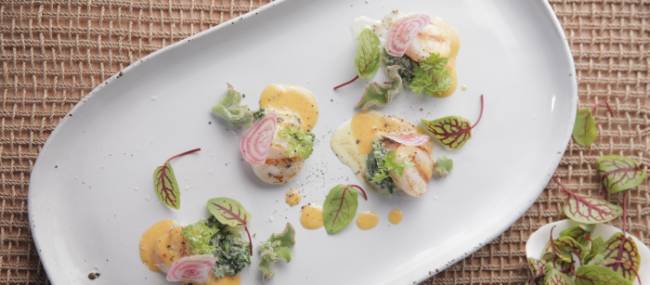
Tasmanian scallops with chardonnay butter | Peter Kuruvita
Blog home / Seafood recipe: Peter Kuruvita's Scallops with Chardonnay Butter
Miss Tasmania's seafood? Try your hand at this seared scallop dish paired with an amazing chardonnay butter sauce. Fair warning: it may make you want to hop on the next plane down to the island state!
This recipe is from the King of Spiced Seafood himself, Peter Kuruvita, who will be leading a culinary tour across Tasmania – check out the itinerary that'll probably leave you watering at the mouth.
Region: Tasmania | Serves: 4 | Difficulty: Mid
Prep: 40 mins | Cooking: 15 mins | Chilling time: 15 mins
Choose plump scallops and if you can buy them with the roe, even better because these become part of the sauce, the sauce needs a bit of care but is so tasty.
And when dealing with stinging nettles, please use gloves as the sting is itchy and annoying, you could also substitute baby spinach.
Ingredients
• 20 Rottenest or Tasmanian scallops, removed from the shell
• Olive oil, for drizzling
• Sea salt and freshly ground black pepper
• 2-3 baby target beetroot, sliced paper-thin using a mandolin
• Micro herbs including chervil, sorrel and ice plant, to serve
For the chardonnay butter:
• 50 g Tasmanian scallop roe
• 200 ml white wine vinegar
• 500 ml (2 cups) Kevin John Chardonnay
• 5 black peppercorns
• 1 golden shallot, finely chopped
• 1 bay leaf
• 300 g butter, softened
For the creamed nettles:
• 100 g (4 cups) raw nettles
• 30 g butter
• 5 garlic cloves, minced
• 80 ml (⅓ cup) pouring cream
• 25 g finely grated parmesan cheese
Method
1. To make the chardonnay butter, place the roe, vinegar, wine, peppercorns, shallot and bay leaf in a small saucepan and simmer over low heat until reduced by three quarters. Remove from the heat, transfer to a blender and process until finely ground. Do not sieve, just make sure everything is well ground. Transfer to a bowl and refrigerate until chilled.
2. Using an electric mixer, beat the butter until very light and fluffy. With the motor running, gradually add the chilled reduction to the butter, beating well after each addition until well combined. Set aside.
3. To make the creamed nettles, bring a large saucepan of water to the boil. Put on your garden gloves and gently empty the nettles into a colander in your sink. Rinse well by using the tongs to flip the nettles. (I know you shouldn’t need both tongs and gloves but be safe!!)
4. Drop the nettles into the boiling water and cook for 3-4 minutes, then drain into the colander and rinse with cold water. Let drain. When the nettles are cool enough to handle, cut off the stems with kitchen scissors and discard or compost. Squeeze out the liquid from the nettles and finely chop it by hand or in a food processor.
5. Melt the butter in a frying pan over medium heat. When the butter has melted, add the garlic and stir until just golden. Add the cream and season with salt and pepper. Simmer for about 2 minutes or until the cream coats the back of a spoon. Add the grated parmesan and chopped nettles and cook for about 2 more minutes or until heated through. Serve warm.
6. To serve, place the chilled chardonnay butter in a place in a cold, heavy-based saucepan over low heat. Stand, without stirring just until the butter is half melted. Remove from the heat and whisk until melted and smooth. Make sure the butter doesn’t get too hot- if it totally melts it will split.
7. Heat a large frying pan over high heat. Toss the scallops in a bowl with a few drops of olive oil and season lightly. Cook the scallops for 10 seconds on each side or until golden but still translucent in the centre.
8. To assemble, place small dollops of warm creamed nettles on serving plates. Top with the scallops and spoon a little warm chardonnay butter over each. Top with shaved beetroot slices and herbs.
Recipe featured in Peter Kuruvita's Coastal Kitchen.
Hungry for more? Join Australian foremost chef Peter Kuruvita on his next foodie adventure across Tasmania. Peter has a knack for really knowing how to bond with locals anywhere over a mutual love of food and produce; plus you'll enjoy hands-on cooking demonstrations and the chance to know the local's lore and their cooking secrets.