Conquering Tasmania's Remote Wilderness
The South Coast Track
‘Yes, I did it’ and ‘I made it’
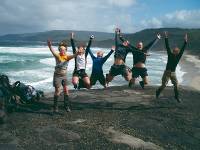
The feeling of accomplishment is exhilarating for all walkers conquering one of Australia’s most remote wildness walks, Tasmania’s South Coast Track. The sheer delight of getting to the finishing line through mental and physical stability is immeasurable. It is a feeling that lasts a lifetime for South Coast Track ‘champions’.
Dating back over 100 years, the challenging 85km track, which winds its way through the middle of the South West National Park, from Melaleuca in the South West to the Southern area of Cockle Creek was originally mapped out as an escape route for shipwrecked sailors and is now considered one of Australia’s last great wilderness walks.
There’s a couple of options to get on the track – a flight in from Hobart, landing on the gravel airstrip at Melalecua, sailing to one of the track beaches, or a walk in or walk out at Cockle Creek. As there are no roads into Melalucua, most walkers opt to fly in and commence the walk here rather than at the other end at Cockle Creek, enjoying the spectacular flight over the national park’s pristine wilderness. This is advisable as poor weather conditions can cause delays on the track and make it a challenge to miss a pre-booked flight from Melalucua to Hobart.
Whatever direction you walk the South Coast Track, its remoteness is an experience to be savoured, taking you off the grid and away from the busy-ness of everyday life. It can be an opportunity to form new bonds with fellow trekkers, or reconnect with family and friends who are partaking in the challenge.
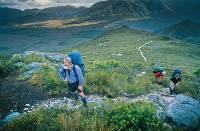
Between eight to nine days are spent traversing the track with numerous challenging forms of terrain. Walkers can expect boardwalks, muddy sections, rough surface, sandy beaches and steep climbs, though all are worth the experience of the incredible views.
The grand Ironbound Range is another track highlight, towering nearly a thousand metres above sea level . While the five-kilometre ascent is challenging, the views from above are incredible, taking in the Arthur Ranges, South West Cape, Maatsuyker Island and Mount Anne. The descent down through a dense rainforest featuring tangled branches, thick green moss and lichens is equally stunning.
Besides the magnificent views of the mountain ranges, there’s the open plains, swimming in fresh water creeks, showering under a waterfall at Granite Beach, camping by the beach and watching the sunrise behind Lion Rock.
With the remoteness comes the prospect of spotting more wildlife in the national park. As there is less human impact on in this environment the chances of seeing a wombat, elephant seal, or endangered birds such as the orange bellied parrot, Fairy Tern and Little Tern are great.
Warmer months are the ideal time to walk the track. However, you can still experience strong southerly winds, heavy rain, or warm and glorious conditions – or a combination of all three.
Whatever the conditions, it’s important during your journey, to reflect at the end of each day and take in the path you have completed. Instead of just focusing on the challenges ahead, take the time to praise yourself for what you have accomplished.
Ready to take on the challenge of the famed South Coast Track or interested in extending the trek and exploring more with a 16 day Port Davey and The South Coast Track?